Laser
Whether you're considering LASIK (Laser-Assisted In Situ Keratomileusis) or PRK (Photorefractive Keratectomy), both are safe and effective alternatives to glasses and contacts for correcting refractive errors such as nearsightedness, farsightedness, and astigmatism. Discover the differences between these procedures, their benefits, and how they can help you achieve clearer vision. Explore our page to learn more about which laser eye surgery is right for you!
What is LASIK eye surgery?
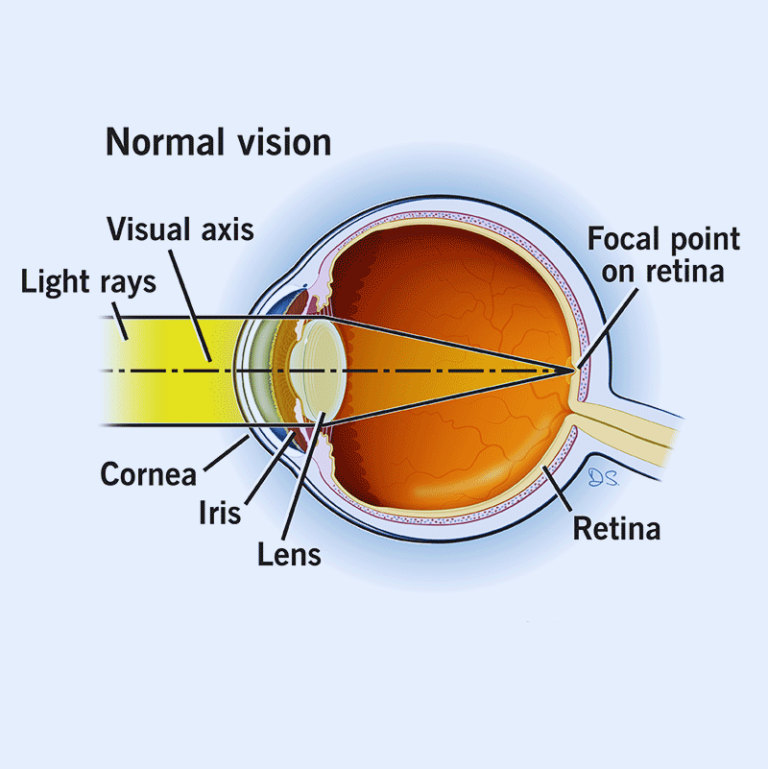
Many articles, including this one, will use the term “LASIK” to refer to all types of laser eye surgery. LASIK eye surgery is a refractive eye surgery that uses lasers to fix problems with your vision. This surgery is an outpatient procedure, meaning that you can go home the same day. LASIK corrects refractive errors, which happen when your eye can’t refract (bend) light as it should. Refractive errors lead to blurry vision. LASIK can help you see more clearly and enjoy a better quality of life.
LASIK may be a treatment option for people who don’t want to rely on glasses or contacts to improve their vision. After LASIK, you may not need your glasses or contacts at all. Or, you may need them only in certain situations, like when driving at night or reading. If you’re considering LASIK, it’s important to learn how it works and its benefits and drawbacks so you can make an informed decision. For example, not everyone is a candidate for LASIK.
What conditions can LASIK treat?
Called myopia, is a condition in which you see nearby objects clearly, but distant objects are blurry. When your eyeball is slightly longer than average or when the cornea curves too sharply, light rays focus in front of the retina and blur distant vision. You can see closer objects more clearly, but not those that are far away.
Called hyperopia, is a condition in which you can see far objects clearly, but nearby objects are blurry. When you have a shorter than average eyeball or a cornea that is too flat, light focuses behind the retina instead of on it. This blurs near vision and sometimes distant vision.
Astigmatism causes overall blurry vision. When the cornea curvature is not the same across the entire cornea, the result is astigmatism, which disrupts focus of near and distant vision.
PRK or LASIK?
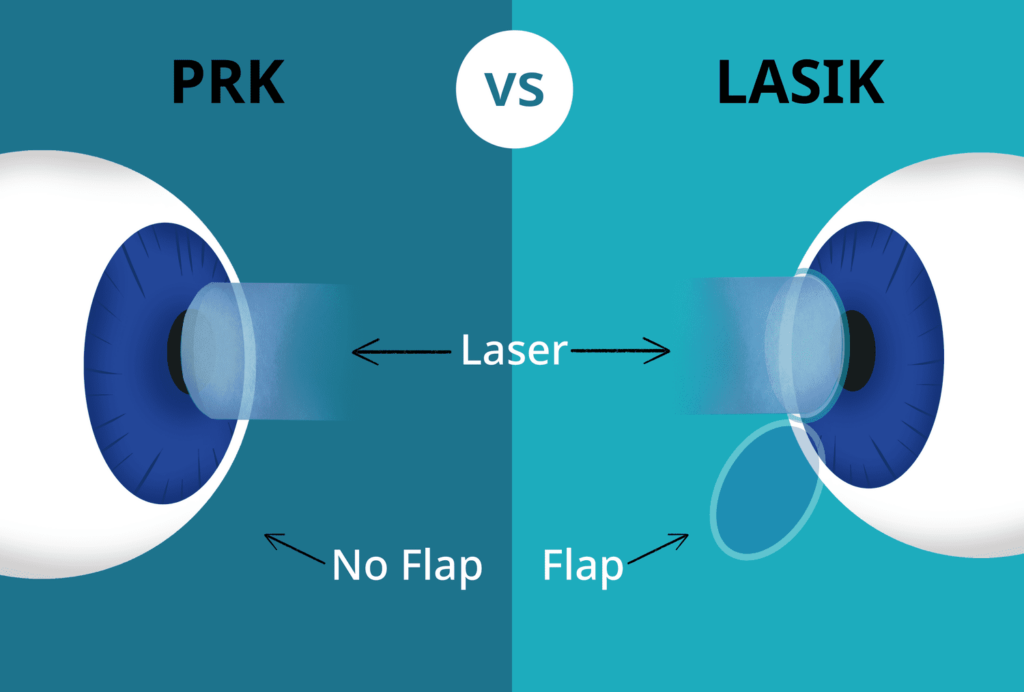
With PRK (Photorefractive keratectomy), rather than forming a flap, the top surface, called the epithelium, is removed. This corneal abrasion takes 3 to 4 days to heal, resulting in mild to moderate pain and blurred vision in the short term. Visual recovery takes longer in PRK than it does with LASIK. It was thought that these drawbacks were outweighed by the theoretical advantage that PRK was safer for people who are more likely to be struck in the eye — for example, those involved in contact sports, law enforcement or the military. But even with standard LASIK, the risk of cornea flap dislocation is still very low, so there is probably no significant advantage with PRK. However, PRK may be a better procedure for those with thin corneas.